
THE advice just given by various authorities including the Boat Safety Scheme (BSS) 'If you can smell exhaust fumes in your boat, don't ignore this sign that there could be a potential killer in the cabin', is not as obvious as might by realised.
The two people and a dog found dead on a cruiser on Wroxham Broad had its petrol engine running, with its exhaust fumes blowing into the boat, that were obviously ignored.
 Pay attention
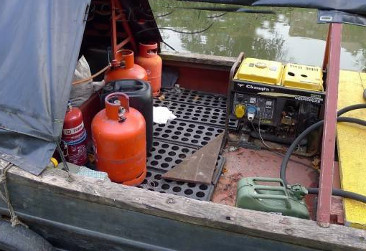
Boaters need to pay attention to exhaust gases, particularly petrol engine exhaust fumes if they can smell them in the boat's cabins because they can contain carbon monoxide (CO) in quantities that will harm or kill warns UK Parliamentarians and the BSS. The picture shows a generator, fuel, gas and even camping gas cylinders all in the bow of a narrowboat, all obviously in use. An accident waiting to happen.
The call follows the publication of the Marine Accident Investigation Branch safety bulletin concerning the recent deaths from CO poisoning of two people on their moored motor cruiser in Norfolk. Investigations found that exhaust fumes from running the engine could blow back in and fill their boat's cabin space within three minutes.
 Simple message
Jonathan Shaw, Chief Executive of Policy Connect and the former Minister for Waterways, had this simple message:
"If you can smell exhaust fumes in the cabin there is an issue that needs your attention. If those are petrol engine fumes act immediately. At low concentrations over longer periods it can cause long-term health and memory problems. Higher amounts of CO can kill in just a few minutes."
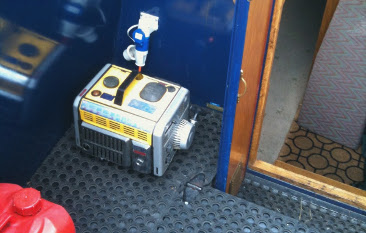
The above picture shows a massive generator right next to cabin doors, and though a silencer and long pipe, fumes can easily be blown back into the boat. The picture below shows an obviously wired-in generator next to the cabin door with fuel stored alongside. Both extremely dangerous.
 Warning
For the BSS, its Manager, Graham Watts, writes:
CO is a colourless, odourless gas, hence the well-known silent killer tag, but you can smell the fumes from the exhaust, so that is why we promote the simple advice if there are exhaust fumes in the cabin, find out why, act to stop the problem and don't put it off.
 Safe boating is to understand and take control of all risks. This includes knowing about the CO risk and being able to recognise the symptoms of CO poisoning.'
The picture shows a gas cylinder right outside door air vents with no covering whatsoever and its loose regular. Dangerous having no protection whatsoever.
Similar to 'flu
The symptoms of poisoning are similar to flu or food poisoning as the toxin begins to take effect, these include headaches, nausea and dizziness.
As time passes and, or the amount of CO builds, you may suffer chest pains and breathlessness leading to seizure, unconscious. So the early recognition of the symptoms is critical, but if nothing is done, death can happen quickly.
Avoid problems by staying alert to engine fumes—keep them out of the cabin.
Never aboard
Run portable generators ashore away from the boat, never aboard.
Don't run a propulsion engine when moored if the exhaust fumes are blowing back inside, even if your batteries are desperate for a charge. Wait until the wind changes for the better or move to a different mooring.
Be a good neighbour and don't run petrol engines where exhaust fumes could enter a nearby boat cabin.
Critical points
* Know the symptoms of CO poisoning, if anyone is indicating they are suffering, get them medical help. If the symptoms are severe—call the emergency services.
* As a belt & braces defence, install a certified CO alarm (BS EN 50291-2), test it routinely and never remove the batteries.