
THE Canal & River Trust warns that the ever increasing number of people living on boats in London is placing unprecedented pressure on the waterways' infrastructure.
With house prices in the city out of reach of many, hundreds of people have taken to the water as boats are perceived as more achievable with an explosion in boat numbers in recent years, the Trust stating a 57% increase since 2012.
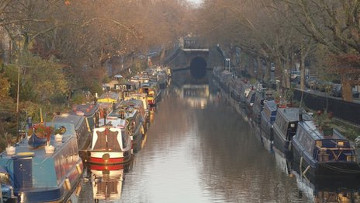 Survey
This prompted the trust to carry out its first ever 'Who's On London's Boats' survey to build a picture of the capital's boating community in an effort to understand and meet their needs. The results show that boat living is increasingly seen as a viable alternative lifestyle by many, particularly younger, as well as living alone or as couples.
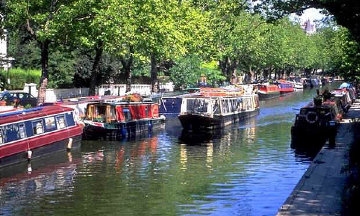 The Trust tells us that just over 1,000 boaters responded, with just over half the total describing their boat as their primary residence, with a further 156 saying the boat is either a second or temporary home, with 50% citing financial reasons as motivation for living on a boat, with 82% stating they are attracted by the waterway environment and its tranquillity.
Of those responding 70% own the boats outright with 42% living as part of a cohabiting couple.
Continuous cruisers
Such a fast growing community however has presented its problems, primarily the lack of mooring space, with 486 boaters stating they were continuous cruisers, that are required to move their boats every 14 days in a journey that annually covers a significant portion of London's waterways.
With boaters needing to empty their toilets, fill up with water, charge their batteries and find fuel for their stoves, as well as cruise to find mooring space on often crowded spots, continuous cruising can be very problematic, with the Trust's Mathew Symonds, Boating Strategy and Engagement Manager explaining:
Regular and constant access
"If you live on your boat, especially if you continuously cruise, you need regular and consistent access to mooring space and facilities and, in an increasingly busy environment, this can be a challenge: the growth in boat numbers is moving at a faster pace than we can upgrade the infrastructure.
"We are looking at ways we can improve things through our London Mooring Strategy, which aims to address the unique challenges and opportunities of boating in the capital, and these results will help inform its development.
"Living afloat is not the same as living in a house but for many people the lower-cost entry point, not to mention the attractions of a strong community, low-impact living and the charms of the waterway environment, means that it is an attractive option. Our advice is not to see living aboard as a way of saving money as there can be many hidden costs, including time: looking after your boat can be like having a part-time job!"