
WATCHING KIER'S EXCELLENT WORKFORCE lay stone is however, a bit like watching paint dry, writes Alan Yates.
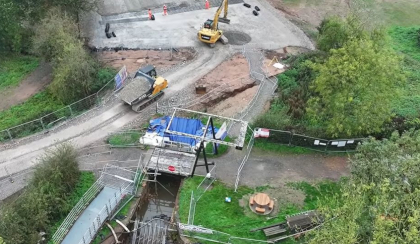
They are now laying the black unidirectional geogrid across the width of the embankment to help contain any possible spreading due to the weight above it.
Repeated until required height
 This then covered by a layer of stone—repeated until the required height is reached.
However, things briefly livened up at a recent Q&A session.
When pressed with a good technical question, the Canal & River Trust project manager ruffled his feathers and fell back on the tired old 'Armchair Engineers' defence.
Clearly, the manager hasn't heard of Google or AI chatbots, which can generate detailed, accurate engineering data in under 5 minutes—thus enabling any tech-savvy person to become well-informed on, say, the ideal moisture content for laying 6F5 (150mm + fines).
The answers I obtained when checking for this report didn't include application during pouring rain!
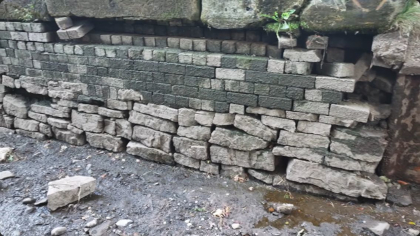
Even more questionable stonework
 Meanwhile,'portadam' specialist workers have removed the tarp from the temporary dam at the lift bridge, exposing even more questionable stonework along the ancient wash wall.
Despite the site currently being drained, there has been no attempt to investigate whether this poor section has been feeding water directly into the embankment base.
Perhaps doing so is a bit embarrassing while drones are buzzing overhead?
So it's more black unidirectional geogrid plus stone laying for the next couple of weeks to bring the embankment up to the required level for the concrete trough.
Whether CRT will discover curiosity and chase the source of the water ingress remains to be seen.