
DURING THE SUMMER, lock cills can catch boaters unaware, and once a vessel’s caught on a cill, it can quickly sink.
 Well aware indeed
River Canal Rescue all too often have to rescue boats so trapped so are well aware indeed of these incidents, with chief rescue co-ordinator, Pete Barnett, explaining what to do if your boat’s caught on a cill, writing:
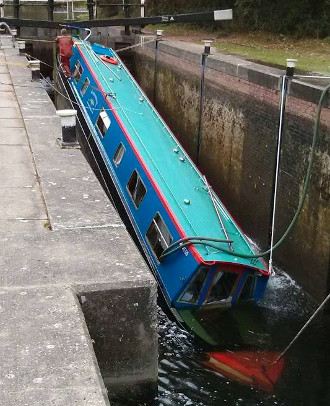
Cills protrude below the water, close to the top gates of most canal locks. If you’re travelling downhill in the lock chamber and your stern, ie rudder, gets caught on the cill, when the water recedes only the bow of your boat will lower with the water level, leaving the stern raised up. Sinking or capsizing can happen in seconds.
If you’re aware the stern’s caught, close the bottom gate paddles to stop the water receding further, slowly open the top gate paddles to refill the lock. The best way to stay safe in the lock is to position yourself centrally and where possible keep the engine running with a centre line to hold yourself in position whilst you tie off.
A boat travelling uphill can equally get its bow stuck on a projection under the top gate—causing the stern only to rise with the water level. If this happens, close the top gate paddles to prevent the lock filling and open the bottom gate paddles to allow the water level to fall. These images are of boats being rescued by River Canal Rescue.
Devastating consequences
Simple oversights, such as being unaware of the position of a lock cill, can have devastating consequences with Pete continuing:
If your boat’s rapidly taking on water, top priority is to ensure everyone in your crew is safe. Next contact the CRT, they’ll send out a team to assess the site, contain pollution and ensure your boat isn’t causing a navigational hazard.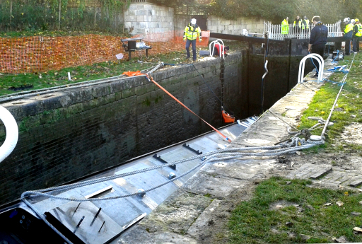 Boats on the Thames and waterways where the CRT does not have jurisdiction, will need to contact the EA. In either case, the EA and CRT will work in tandem with recovery specialists to get your boat moved as quickly as possible.
If you own the boat, you’re responsible for finding someone to raise your vessel, arrange the work and liaise with the authorities. While you’re free to use your own contractors, if you need to bring plant/lifting equipment onsite or use non-emergency service divers, the contractors will have to meet the CRT’s/EA’s risk management requirements; otherwise they’ll not be given permission to raise the vessel.
Start salvage straight away
River Canal Rescue is a CRT pre-authorised salvage specialist which means we can start the salvage straight away. Most insurance companies expect you to take action to mitigate loss in situations like this and a fast recovery reduces the amount of damage a vessel suffers and helps to keep insurance claims low.
If you have insurance, contact your insurer who will ask for a specialist recovery firm to salvage the craft. It’s likely our team will appear on the scene as we’re authorised to handle claims for most of the UK’s leading boat insurers. Once the boat is raised, the cause of the sinking will need to be identified by an engineer or surveyor before the claim’s accepted.
RCR can be contacted at any point in the process; it all depends on the urgency. If a vessel’s in the process of sinking, contact RCR first. In most cases, a rescue team can be arranged within hours. If the vessel has already sunk, as long as a recovery is in place within 48 hours, the damage is still manageable and the vessel will be recoverable.